Artwork by Minh Chiến - www.facebook.com/chi3n.arc
Updated:
What is "Techwear"? - Basic Knowledge and Personal Opinion
Although the origins and timing of the term "Techwear" are still debated, it's undeniable that over the past 15 years, "Techwear" has become a hot topic in the fashion industry, and its influence on the industry is constantly increasing. So, what exactly is "Techwear"?
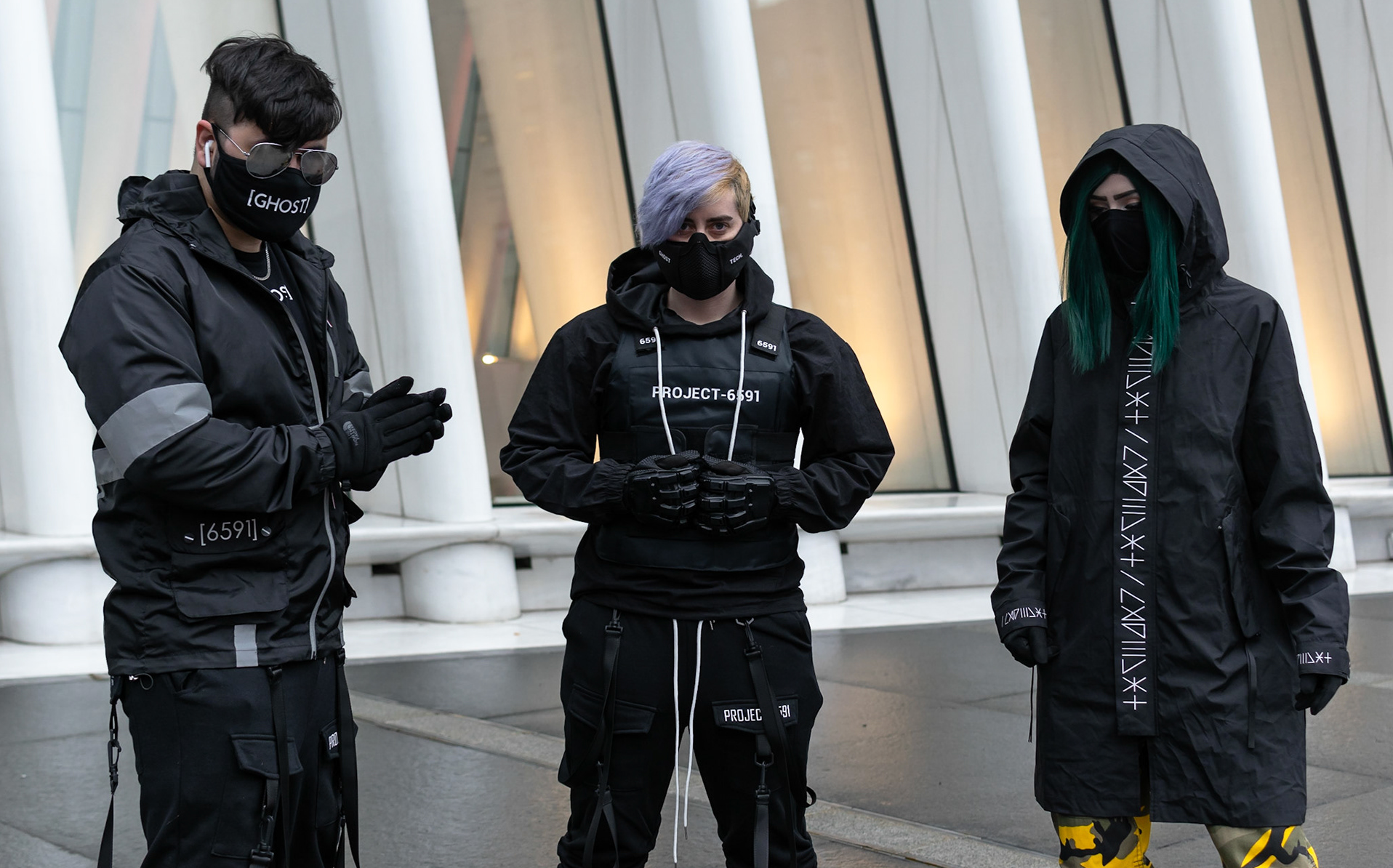
FUNCTIONS:///////////////////////////////
The primary goal of Techwear is to make life easier for the wearer and to prepare them for any environmental situation in their daily lives. This is demonstrated through three main functional elements:
— COMFORTABLE:
One of the primary strengths of techwear is its materials. Designers consistently use materials with advanced features superior to conventional fabrics, such as odor control, body temperature regulation, water resistance, durability, and reflectivity, for their products.
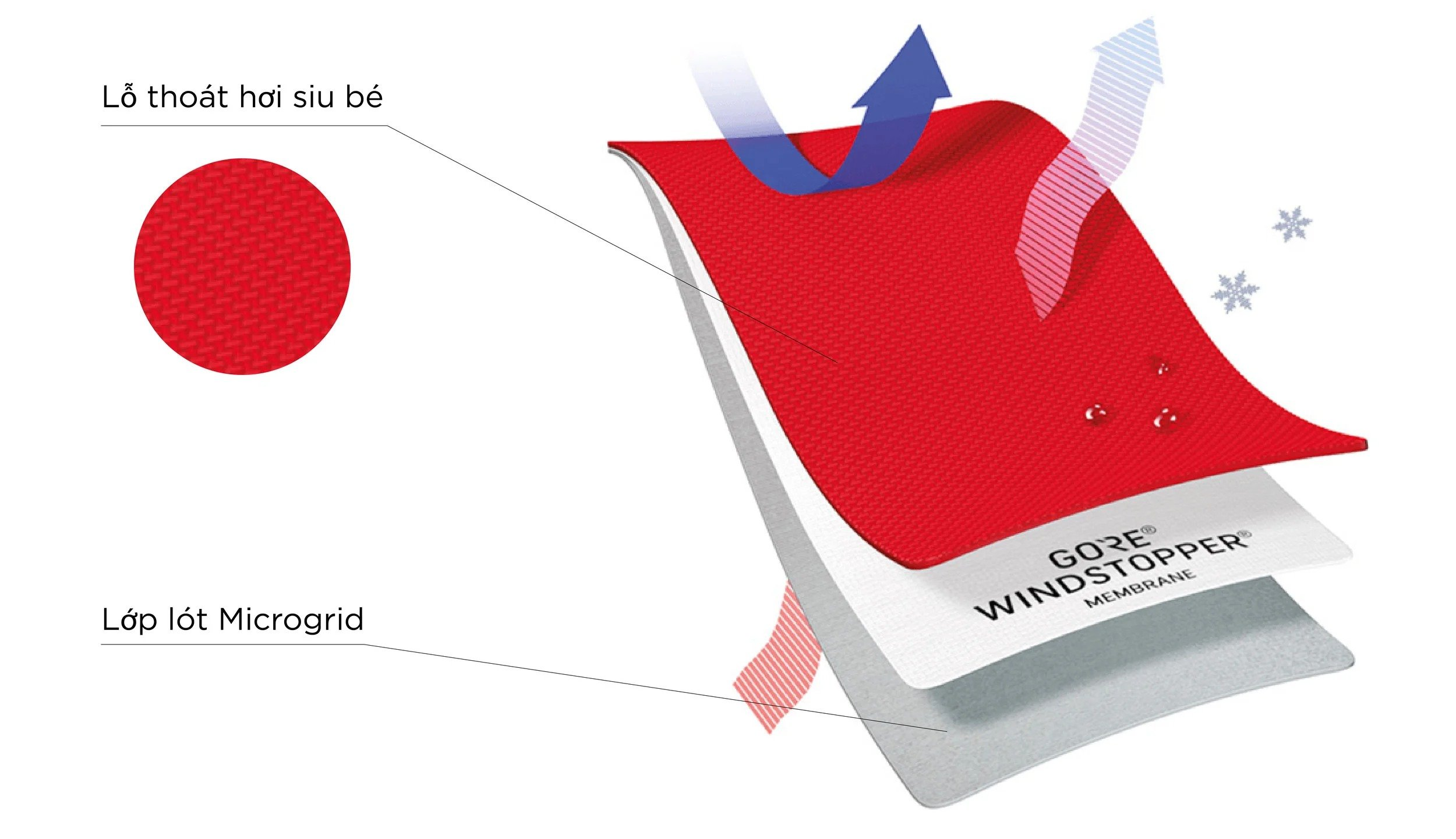
The image illustrates GoreTex's Windstopper fabric technology, which blocks wind and repels water while also allowing the body to dissipate heat.
There are two main factors that designers often prioritize when choosing materials: water resistance and breathability. Both factors usually go together because, in addition to protecting the body and preventing water and wind from penetrating, Techwear products must also allow the body to "breathe" and dissipate heat; otherwise, a Techwear outfit would be nothing more than a portable sauna.

Illustrative image - Nikelab ACG 2-in-1 Trench coat from FW15 in snowy weather in Hanon shop's lookbook.
Beyond just fabrics, even the hardware (buttons, zippers, buckles, etc.) used in the design is carefully considered to enhance durability or further support the "convenience" aspect of the product.
— Range of motion
Techwear typically doesn't follow the conventions and standard patterns of mass-produced garments. The products are always designed to optimize the range of body movement through pipe joints, reinforced fabric in key areas, and anatomical patterns. Wearers can move freely and comfortably without feeling the fabric or seams clinging to their bodies, and without worrying about fraying or tearing.
Ultimately, the main purpose of clothing is to protect your body from external elements, not to restrict your movements.
Errolson Hughs and the Acronym Team don't hesitate to showcase martial arts moves to highlight the durability and wide range of motion in Acronym's products.
— CONVENIENT but PRACTICAL
Techwear was created for "commuters," the dynamic urban dwellers. The fast pace of modern life means we always have to carry around a ton of things: phones, wallets, tablets, power banks, and many other personal items.
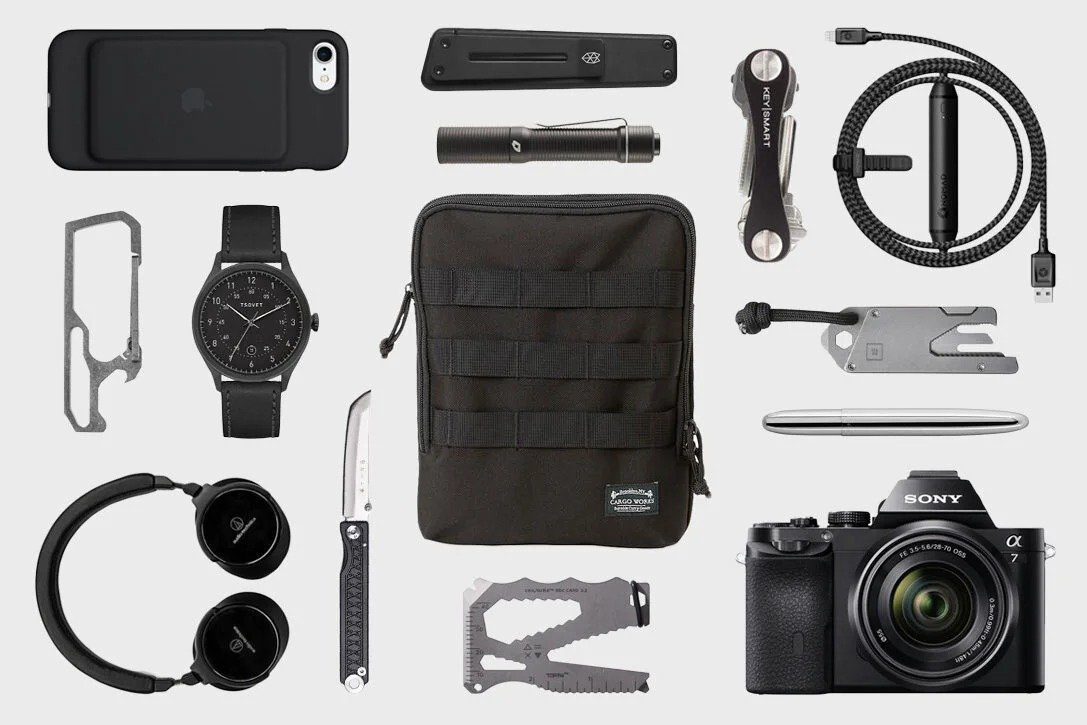
Illustrative image - Concrete Jungle: 20 Urban EDC Essentials
Therefore, Techwear products always offer sophisticated solutions not only for carrying items but also for arranging space for the most convenient and comfortable fit for the wearer. These solutions are often developed from ideas of their predecessors, such as the logically arranged pockets in workwear, the spacious and comfortable box pockets of outdoor wear, and even the detachable modular pouches in tactical wear.
With innovative carrying solutions and advanced protective materials, wearers can carry more and worry less. (Although, from personal experience, I've often struggled to find my wallet and keys in over 18 large and small pockets on my person, not including my shoulder bag…)
The convenience aspect of Techwear extends beyond just the pockets; it's also evident in numerous other auxiliary details that facilitate smoother interaction between the wearer and the product, and between the wearer and the urban environment. Some typical examples include:
- Jacket slings allow the wearer to detach and wear the jacket over their shoulder instead of carrying it in their hand when entering public transport or buildings with higher temperatures.
- Magnets are being applied to clothing, with designs like Acronym's ForceLock allowing wearers to temporarily hang their headphones near their ears, making it convenient to continue their playlist after interacting with others without having to deal with tangled wires. Some later designs from Stone Island and NikeLab ACG are also designed to support wireless headphones.
- Special zipper systems like EscapeZip, OpenTop, etc., make it easier to take off and put on shirts and pants.
Above all, all those convenient details must be accompanied by practicality. Every detail on a product has a function, carrying a certain meaning, whether big or small. When designers start creating a techwear product, they won't just put a zipper on pants to "look cool."
— Secondary Factor - Adaptability
The Adaptive element allows the wearer to customize their outfit to suit their surroundings and needs. Some typical designs include: Acronym SET 1 (Spring/Summer 11) or NikeLab ACG Women's Deploy JacketThere are pants. Acronym P30a-DS and Enfin Levè Aldatze with detachable sleeves or trouser legs.
The interchangeable bag system of Stone Island: Shadow Project 30308 Cargo Pants and NikeLab ACG Deploy Cargo Pants These are also two noteworthy designs when discussing adaptability.
Taking it a step further to enhance adaptability, many designers have brought the Molle system from military backpacks to clothing. A prime example is the jacket. E-J4TS, J1TS-GT, trousers P5TS-S, P10TS-DS belong to Acroname.
FORM:///////////////////////////////
Thanks to the above factors, we can distinguish Techwear products (and those suitable for Techwear) from other clothing items. So, from an aesthetic point of view, what constitutes "Techwear"?
Speaking of aesthetics, Techwear has developed to its current state and is receiving more attention from consumers. However, because everyone has a different perspective on beauty, this gives rise to disagreements and leads to much debate within the community. Therefore, with my limited personal fashion knowledge, I will try to present my views as clearly as possible. Please forgive any shortcomings.
The widespread mainstream presence of techwear today is largely thanks to the contributions of five brands: Acronym, Arc'teryx: Veilance, Stone Island: Shadow Project, NikeLab ACG, and CP Company. Notably, four of them come from the same designer – Errolson Hugh.
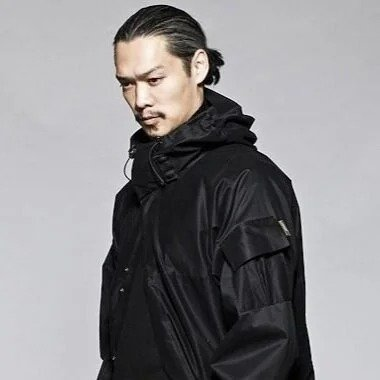
HAIR-rolson! Surpriseeeeeeeee!
Originally a skiwear designer, with a passion for martial arts, and most importantly, deeply imbued with the Bauhaus philosophy of "Form Follows Function" in industrial design, all these influences, combined with long periods of exposure to, learning from, and perfecting the design process, manufacturing technology, and the most advanced materials, have made Acronym the source code, the original DNA of performance menswear (as he stated in an interview).The Legacy of Veilance" with Taka Kasuga).
To be precise, Acronym Studio is a place where each product is the result of experimentation on a predecessor to optimize its performance. Acronym, and specifically Errolson Hugh, has set up what is called "Techwear Aesthetics."
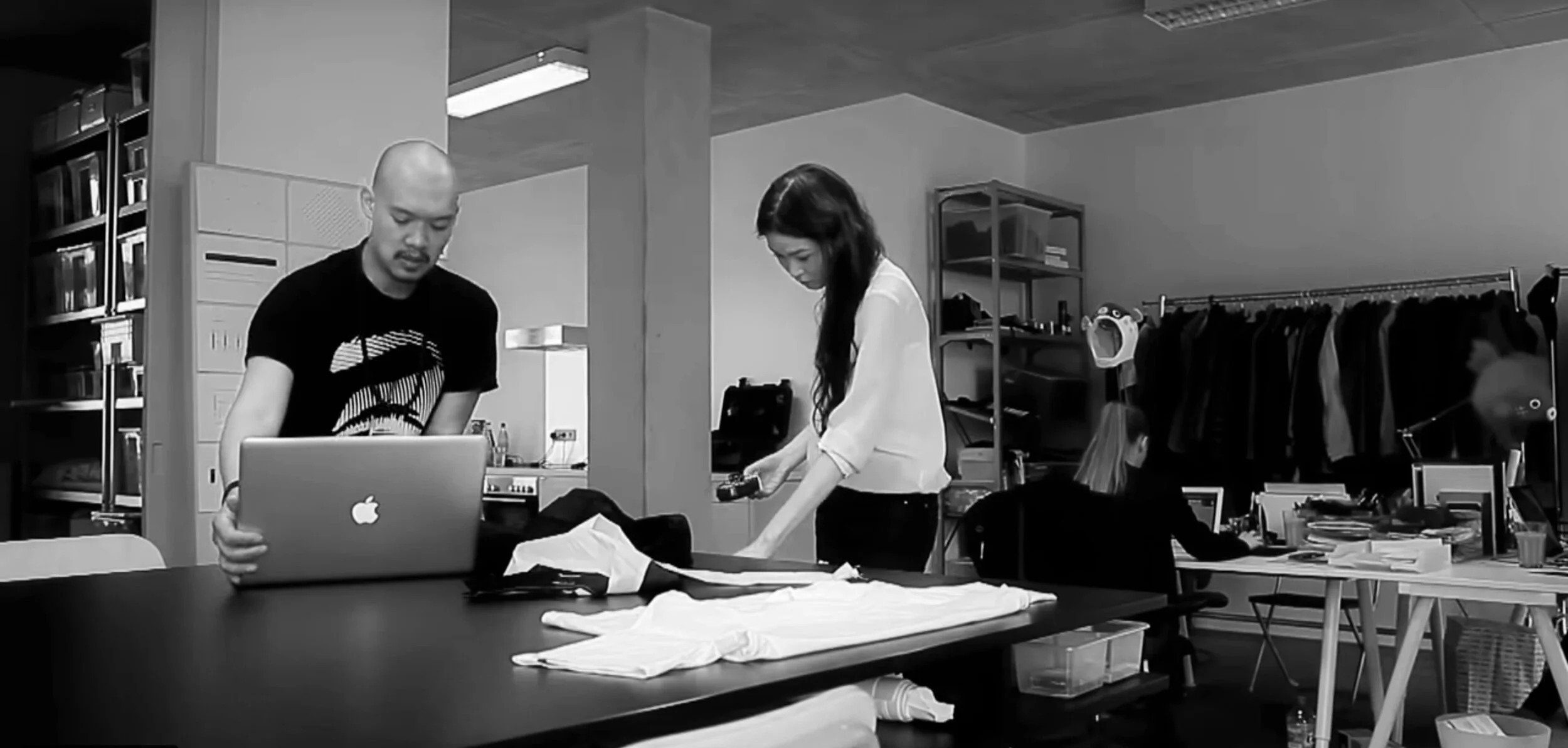
From the perspective of an average shopper, you can clearly see Acronym's "experiments" in optimizing designs borrowed from all over, such as the military.J56-GT, P34-S...),
civil servantsGT-J11, P10-S...
martial artsJ72-DS, P25-DS...),
workwearE-J4TS, P24A-S...).
And you can also find images of those “experiments” repeated at Veilance through the neat and tidy designs of the office environment.
In Stone Island: Shadow Project, the designs have a rugged, military-inspired look.
Or, the dynamic and relaxed spirit of hiking is redefined for urban life at NikeLab ACG.
In short, at techwear, there's always something for everyone. Whether you want a cool, edgy look or a neat, minimalist style, I think the most important thing when evaluating a techwear outfit is "Form Follows Function"—the design must serve its purpose. How does the outfit help the wearer in their environment, in the weather conditions they face, etc.?
It would be remiss not to mention the "Cyberpunk" aspect of Errolson Hugh's designs. As mentioned, Acronym started as a freelance design agency for major brands. The fact that the Acronym label first infiltrated the wardrobes of mainstream consumers can be attributed to its guerrilla marketing tactics on fashion and travel forums (most notably the SuperFuture forum). With its exceptional quality, it's no surprise that Acronym's products were widely discussed on these forums.
Next, there's the exclusive sale via a private subnet, which you can only log in and purchase with an invitation.
Finally, the staging and graphic imagery in Acronym's lookbook videos always closely resemble the graphic motifs in famous cyberpunk works such as Akira, Blade Runner, Ghost in the Shell, etc.
Not to mention that later on, quite a few of Acronym's designs were incorporated into cyberpunk-themed games and films (Ghost in the Shell 2017, Deus Ex, Death Stranding). This inadvertently categorized Acronym as "Cyberpunk." Personally, I think that while there wasn't a direct Cyberpunk influence on Acronym's design, elements like adaptability, concealment, lowkey, modularity, and material made it suitable for the Cyberpunk context. Errolson himself rarely agrees with this, but that's another story I won't discuss in this article.
Next, let's talk about color. You often see Techwear coming in a rather dark color palette, specifically black and olive green. However, not all black is Techwear. (Let me remind you that Acronym's products (can be considered) first launched for mass consumers, outside of Acronym's subnet, are...) màu trắng).
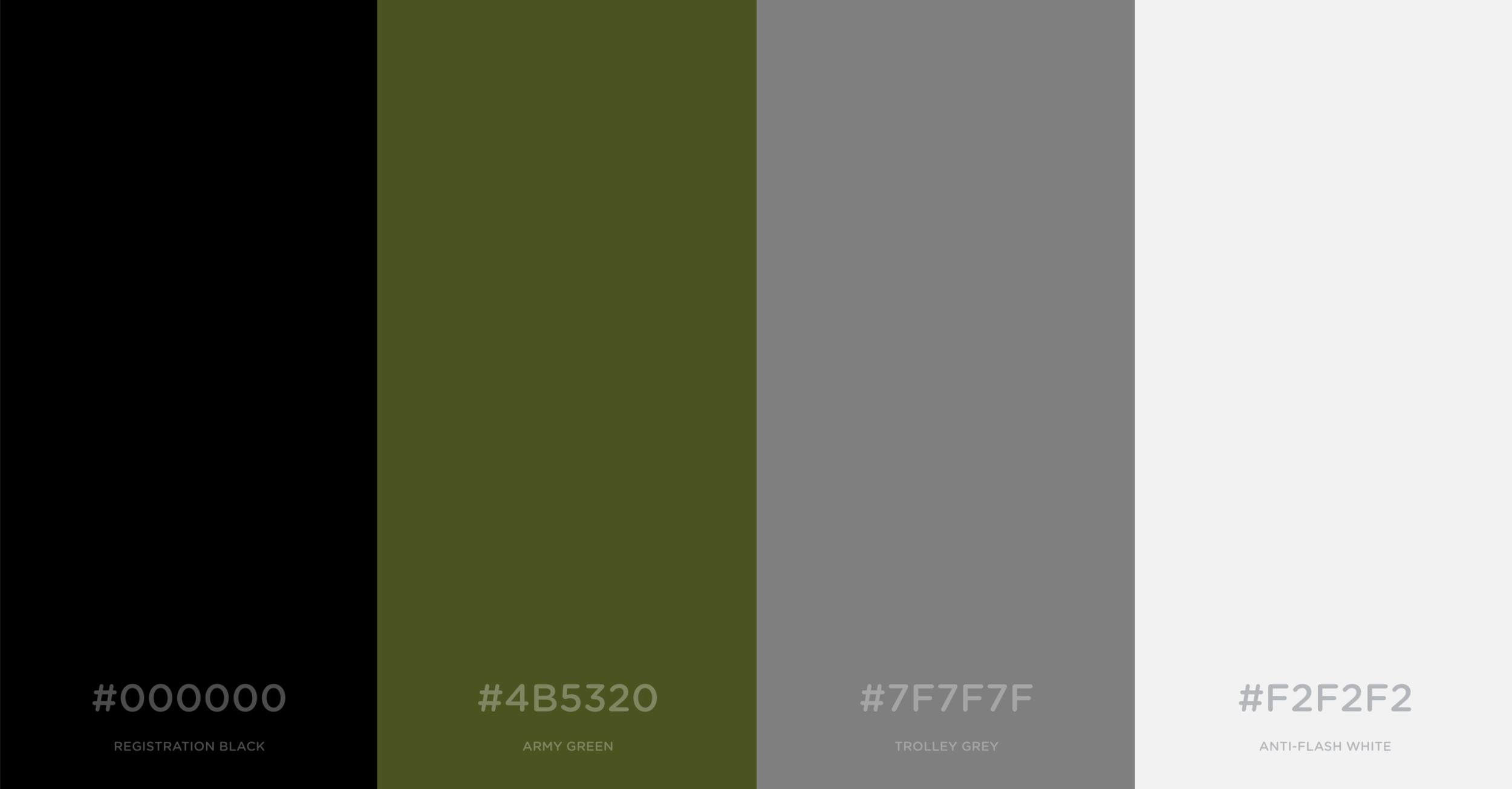
Errolson explained the reason in an interview with Jeff Staple.episode 23, series podcast “Business of HypeThis is because in the early days, when Acronym didn't own its own production line, to start producing any material, they had to meet a minimum production quantity. Black and military green were always the colors with the lowest minimum order requirements due to high demand. At the same time, economic data proved that these two colors were easy to sell and easy for buyers to coordinate. Later, as their reputation grew, they owned their own production facilities, and fabric brands became familiar with Acronym's production quality, they were given preferential treatment, exempting them from the minimum order requirement. By this time, the dark color palette had become Acronym's signature, representing the "Techwear aesthetic."
A small note about Techwear aesthetics that I want to address, perhaps to broaden the definition of Techwear aesthetics. Although Acronym established a "Techwear aesthetic," it would be wrong to say that Techwear is Acronym. Everything evolves. At a price point that even Tim Cook would admire, Acronym, after pioneering this fashion segment, left fertile ground for many smaller brands to emerge. Some brands focus on technical fabrics and product design, while others prioritize the product's appearance over aesthetics. Ultimately, this leads to the debate of "Is this Tech?" / "It is Tech," and in my opinion, most of these arguments are flawed on both sides.
First, I want to exclude products that focus solely on appearance while neglecting aesthetics. These are definitely not techwear, as I explained; if something is beautiful but lacks functionality, it's not tech (for example, brands like Holy Grail, Ghost Techwear, MXDVS...).
As for the other brands, from the Acronym family and its subsidiaries, Outlier, CP Company, White Mountaineering, 0608, Uniqlo, Lululemon... the most accurate term I think should be used to refer to them collectively is "Urban Techwear." The reason for using this term goes back to the context of Techwear's use. Even if the products of these brands originated from experiments in clothing and fabrics or from outdoor products, ultimately they are still designed for urban living (Believe me, if you're at an altitude of over 2500m on the summit of Alta, Utah in the middle of a snowy winter, no Acronym set will help you survive; that's still The North Face's territory).
The urban lifestyle context will help you make a more accurate assessment when talking about "Techwear aesthetics." Therefore, even though Acronym is the birthplace of "Techwear aesthetics" today, there are other brands that delve deeper into technical and technological production without being influenced by that aesthetic (Outlier, Lululemon, Uniqlo...) or follow a different aesthetic direction (Riot Division, IISE, Cloudburst...). These brands are still considered "urban techwear" as they design for urban life, use advanced design techniques, and high-performance fabrics. Therefore, you can't just pull out a black TNF, Columbia, or Nike ACG windbreaker from 10-20 years ago and say you're wearing Techwear. The purpose and context of their design are different from those of contemporary Techwear products.
END://///////////////////////////////
So how should you dress so people know you're wearing techwear and not cosplaying as a soldier or ninja? The answer is "No. You can't." Even if you wear the most hyped items like the Acronym J1A-GT or P30A-DS "uniform" with Nike X Acronym Vapormax, 90% of the time people won't know where you're going to a cosplay meetup.
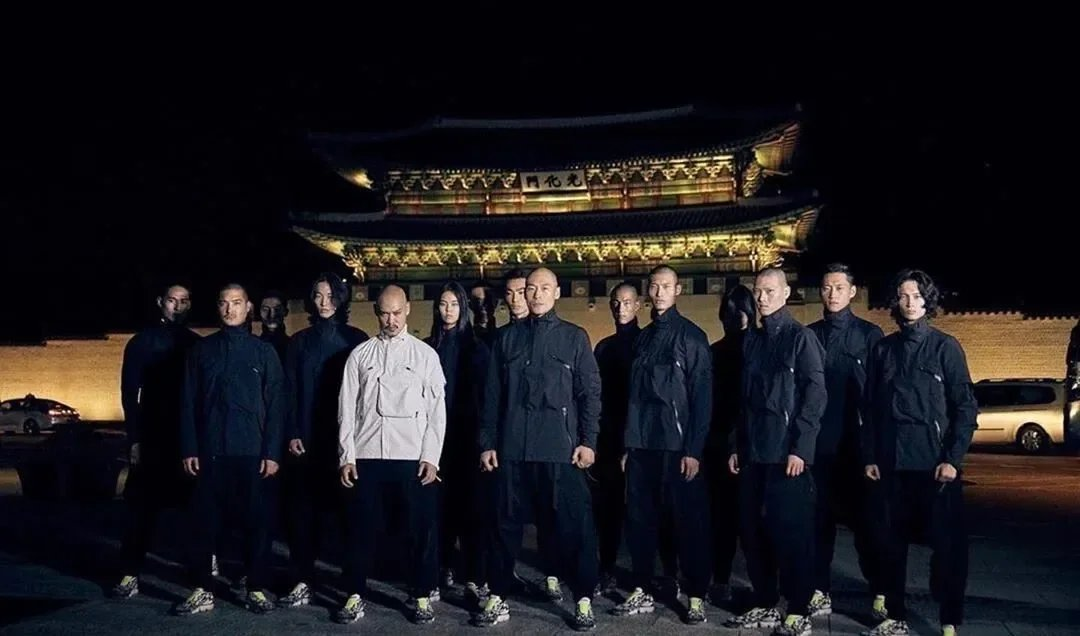
The whole team went in!
“Techwear is how it works, not how it looks”
——
(Techwear is about how it works, not what it looks.)
For me, techwear isn't about flexing or showing off. The best thing about techwear, for me as a designer, is that I understand my body better (through interaction with the products and through the products' interaction with the environment) and I've developed the habit of paying attention to details and the reasons behind them. I have a personal experience after four years pursuing this style. I was injured, but thanks to the comfort of the design, I completely forgot about the injury. When moving, the seams, fabric panels, or joints didn't press against my body or the injured area. There's a quote Errolson once said about Acronym Studio's products in an interview launching four items in the "Lightest/Fastest/Deffest/Baddest" collection that I really like.
For me, this is what sets Techwear apart from regular fashion. Techwear helps you connect with and understand your body, thereby awakening your inner potential so you can do whatever you want and feel absolutely confident and cool while doing it. With Techwear, you can't be superficial like when buying shoes – "oh, ABCD is wearing/promoting/designing these, let's buy them." You have to understand the item, the technology behind it, as well as your body and your life.
PS:///////////////////////////////
Although this article is quite long, it only covers a small part of the surface of techwear. With my limited knowledge, I will leave the more in-depth discussion of technology in techwear to those with more expertise.
Follow page Crystalize's Facebook page -> www.facebook.com/Crystallize.tech/ Stay tuned for more detailed articles.
NEXT POST:///////////////////////////////